.png?width=218&name=phasex-logo-home%20(1).png "Phasex Robertet home logo")
Turning a Problem into a Resource: Four Waste Streams that Can Benefit
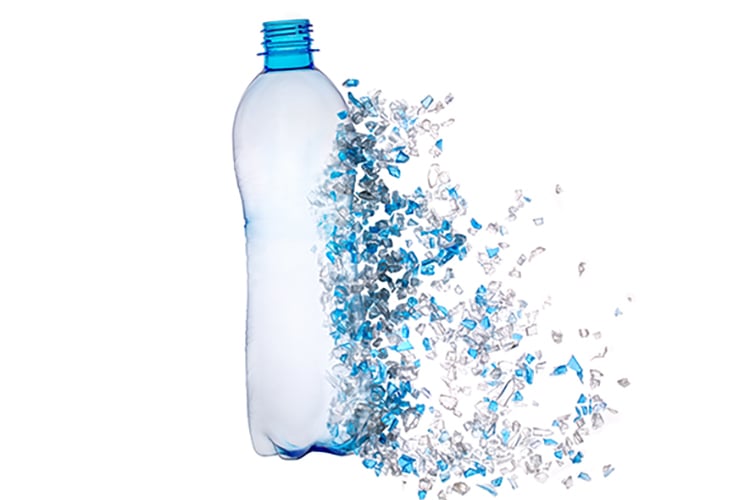
Plastic waste is one of the defining environmental challenges of our time, but it is also one of our most underused resources.Traditional recycling methods struggle with mixed plastics, contamination, and quality loss, which is why only a small fraction of plastics ever see a second life. Supercritical fluid (SCF) technology is changing that, offering cleaner, more selective ways to transform waste plastics into high‑value, “virgin‑like” materials.
Supercritical fluids offer a powerful, emerging way to recycle plastics by selectively dissolving, cleaning, or breaking them back down into reusable building blocks under high pressure and moderate temperature.
What Are Supercritical Fluids?
A supercritical fluid is a substance heated and pressurized beyond its critical point, where it is neither a typical liquid nor a gas, but has properties of both. In this state, it flows like a gas but dissolves materials like a liquid, and its “solvent power” can be tuned simply by changing temperature and pressure.
Several supercritical fluids are especially relevant for plastics recycling:
- Supercritical carbon dioxide (scCO₂), with a critical temperature around 31 °C and a critical pressure of about 73 bar.
- Supercritical water, which forms at higher temperatures and pressures and can act as a very reactive medium for breaking polymer chains.
- Supercritical alcohols (such as methanol), which combine solvent and reactive behavior for depolymerizing certain plastics.
Because SCFs can be recycled within closed-loop systems and often replace organic solvents, they fit naturally into green chemistry and circular economy strategies.
Why Supercritical Fluids Matter for Plastic Recycling
Conventional mechanical recycling can downcycle plastics, producing lower‑grade materials that are harder to reuse in demanding applications. It also struggles with multilayer packaging, composites, and contaminated streams, where different polymers, adhesives, and fillers are tightly bonded together. Supercritical fluids bring several advantages that help overcome these limits:
- Selectivity and tunability: By adjusting pressure and temperature, an SCF can be made to dissolve specific polymers, additives, or adhesives while leaving others intact.
- Mild temperatures: Many SCF processes operate at temperatures lower than conventional thermal treatments, protecting the quality of the recovered polymers and fibers.
- Cleaner products: SCF processes can remove additives, plasticizers, or contaminants, enabling recovery of polymers at “virgin‑like” purity.
- Closed-loop solvents: Fluids like CO₂ are easily separated from products by simply lowering pressure, and then recycled back into the process with minimal waste and no solvent residue.
For companies focused on industrial SCF technology, such as Phasex, these attributes are being applied to challenging polymer and plastic applications, with development work underway to recycle plastics back to high‑quality feedstock using supercritical CO₂.
How the Technology Works: Key Process Concepts
Although each process is engineered for a specific application, most SCF‑based plastic recycling technologies follow a similar sequence.
- Feed preparation Waste plastics are collected, roughly sorted, and size‑reduced (shredded or ground) to increase surface area. For composite products such as shoes, multilayer films, or fiber‑reinforced plastics, materials may enter the process as cut parts or granules.
- Supercritical treatment The prepared feed is placed into a pressure vessel (autoclave or flow reactor), which is charged with the chosen fluid (CO₂, water, or alcohol) and brought to supercritical conditions. At this stage, different modes of action are possible:
- Extraction: SCF CO₂ or other fluids dissolve plasticizers, residual monomers, additives, or adhesives, cleaning or delaminating materials without fully breaking polymer chains.
- Swelling and separation: Supercritical CO₂ can swell certain polymers and penetrate interfaces, weakening bonds between layers or between resin and fibers.
- Depolymerization (chemical recycling): Supercritical water and alcohols can actively cleave polymer chains, turning plastics into oligomers, monomers, or chemical intermediates that can be reused as feedstocks.
- Separation and recovery After treatment, pressure and temperature are carefully reduced to separate the fluid from the dissolved or liberated components. The SCF reverts to a gas (in the case of CO₂) or a normal liquid and can be recycled, while:
- Purified polymers, fibers, or delaminated layers are collected as solids.
- Recovered monomers or oligomers are collected as liquids for further purification or repolymerization.
- Fluid recycling The SCF is compressed, cooled or heated back to the desired conditions, and returned to the process in a closed loop, minimizing waste and operating costs.
This framework can be adapted to very different plastic waste streams, from simple packaging polymers to sophisticated composites.
Application 1: Delaminating Complex Plastic Products
Multilayer products—like composite shoes, multilayer packaging, and technical textiles—are notoriously difficult to recycle because layers are bonded with strong adhesives and consist of different materials. Supercritical fluids, and especially supercritical CO₂, can selectively attack the adhesives or additives that hold these layers together.
A striking example is the use of supercritical CO₂ to delaminate footwear components. In this process:
- Supercritical CO₂ penetrates between layers and dissolves the adhesive without damaging the main polymers.
- After only a short treatment, the sole and upper of a shoe can be separated, leaving polyester and other polymer components ready for more conventional recycling steps.
- Multilayer films combining polyethylene, polypropylene, barrier layers, and adhesives.
- Technical textiles and fashion items built from multiple bonded layers.
- Complex plastic assemblies where glues and coatings are the main barrier to separation.
By attacking the adhesive rather than the structural polymers, SCFs turn previously “non‑recyclable” composites into streams of relatively clean, separable materials.
Application 2: Recovering High‑Value Fibers from Composites
Fiber‑reinforced plastics (FRPs) such as carbon‑fiber composites and glass‑fiber reinforced polyester are essential in aerospace, automotive, and wind energy, but they are difficult to recycle. Traditional methods often destroy fibers or produce low‑quality fillers. Supercritical fluid technology, particularly supercritical water and sub/supercritical alcohols, offers a better route.
Research has shown that:
- Subcritical and supercritical alcohols can depolymerize unsaturated polyester resins in FRP, allowing the glass fibers to be separated with much of their original length and strength preserved.
- Supercritical water can dissolve resin matrices in carbon‑fiber composites, leaving clean fibers that retain 85–99% of the strength of virgin fibers.
In practice, a typical process might:
- Place chopped composite waste in a high‑pressure reactor with water or alcohol.
- Heat and pressurize to supercritical conditions, where the fluid attacks the resin matrix.
- Recover liberated fibers as solids and collect soluble resin degradation products as liquids.
This approach enables true material recovery from high‑value composite structures, supporting circular economies in sectors where waste volumes and material value are both high.
Application 3: Chemical Recycling of Plastics to Monomers and Feedstocks
Beyond physical separation and cleaning, SCF technology can break plastics back down into smaller molecules that serve as raw materials for new polymers or chemicals.
Several routes are under active development:
- Supercritical water: At high temperatures and pressures, supercritical water can promote hydrolysis and other reactions that depolymerize plastics into monomers or short-chain products.
- Supercritical methanol and other alcohols: These can react with certain plastics to produce monomers or useful intermediates in processes often described as solvolysis or alcoholysis.
- Supercritical steam pyrolysis: Technologies combining supercritical conditions with pyrolysis concepts are being explored to convert mixed waste plastics into chemical feedstocks, sometimes with higher yields and better energy integration than conventional pyrolysis.
For example, work on supercritical pyrolysis has shown that using supercritical steam to crack waste plastics can achieve high conversion of plastics to liquid feedstock, with off-gases recycled as process energy, improving overall efficiency. Reviews of SCF‑based chemical recycling highlight that subcritical and supercritical fluids can enhance reaction rates, selectivity, and product quality compared to traditional thermal processes.
This chemical‑recycling approach is especially attractive for mixed or contaminated plastic streams that are not suitable for mechanical recycling, since the output is a feedstock rather than another plastic product.
Application 4: Purifying and Upgrading Recycled Polymers
Even when plastics are mechanically recycled, they often contain additives, odors, and contaminants that limit their reuse in high‑performance applications. Supercritical fluids can help upgrade these materials.
Supercritical CO₂ and other SCFs can:
-
Extract residual monomers, plasticizers, and processing aids from recycled polymers.
-
Remove low‑molecular‑weight degradation products that cause discoloration or odor.
-
Fractionate polymers by molecular weight, improving consistency and performance.
Industrial SCF operations already use supercritical CO₂ to purify specialty polymers and medical-grade materials, demonstrating the scalability of these methods. Extending similar approaches to post‑consumer plastics allows recyclers to move closer to “virgin‑like” quality, opening new markets for recycled content.
Environmental and Economic Benefits
Supercritical fluid‑based recycling supports sustainability on several fronts:
- Reduced solvent use and emissions: SCFs like CO₂ are non‑toxic, non‑flammable, and recyclable within closed loops, cutting hazardous solvent consumption and solvent waste streams.
- Higher resource recovery: By making it possible to recycle difficult plastics and composites, SCF processes can significantly increase overall recycling rates and reduce landfill or incineration volumes.
- Higher product value: Processes that recover monomers, high‑strength fibers, or purified polymers generate materials with higher value than mixed, downcycled plastic regrind.
- Process integration: In some supercritical pyrolysis concepts, off‑gas from plastic conversion can be reused as process energy, improving overall efficiency and economics.
Companies specializing in SCF technology have shown that these processes can be scaled, moving from lab development through pilot plants and into industrial facilities that offer toll processing, technology licensing, and integrated recycling solutions for polymers and plastic‑rich products.
Challenges and Future Directions
Despite its promise, SCF‑based plastic recycling still faces important challenges:
- Capital cost and engineering complexity: High‑pressure equipment, safety systems, and process control make SCF plants more complex than conventional mechanical recycling lines.
- Process tailoring: Each plastic or composite system requires dedicated research to identify optimal fluids, temperatures, pressures, and residence times.
- Scale‑up and standardization: Moving from lab to industrial scale, and integrating SCF processes into existing waste‑management systems, requires collaboration among technology providers, brand owners, and policymakers.
Nevertheless, research momentum is strong. Recent reviews of SCF technology for plastic waste emphasize its potential as a core component of future resource‑recovery strategies, enabling both physical and chemical recycling in cleaner, more efficient ways. Industrial players already deploying supercritical CO₂ on large scales for polymers and other materials are well positioned to adapt and expand these technologies into broader plastics‑recycling applications.
Exploring SCF for Your Business
As pioneers in the industry with four decades of expertise, Phasex is the pre-eminent leader in supercritical fluid CO2 extraction. We are a full-service company providing feasibility studies, R&D, and toll processing to industry and government.
Curious about how SCF CO2 processing can help you meet your goals? We’re happy to discuss a feasibility assessment with you about your supercritical fluid needs. Or contact us now if there are any questions we can answer for you.